
Author: Irem Eren, DipWSET
No and low alcohol and especially in wine is moving into a more exacting stage of development. The category is still small, but the conversation around it is becoming more serious. The question is no longer only whether consumers are interested. It is whether the wines can meet the expectations of producers, buyers, sommeliers and hospitality operators who are used to judging wine by quality, structure, provenance and occasion.
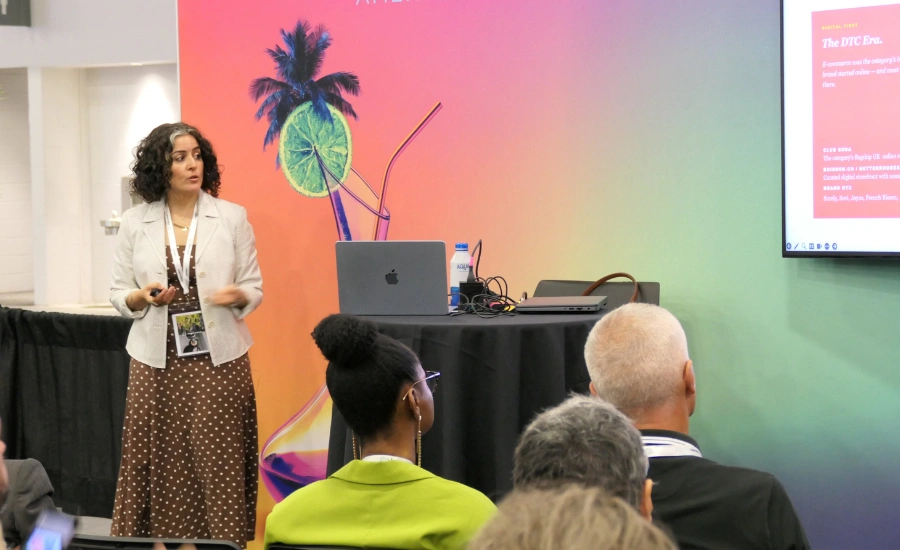 Credit: Irem Iren at Vinexpo America 2026 ©Vinexposium
Vinexpo Americas in Miami this spring offered a useful indication of that shift. No and low alcohol was present not only as a consumer trend, but as a trade question. Producers committed to the category were on the show floor, buyers were asking more specific commercial questions, and the hospitality discussion had moved beyond whether non-alcoholic options should be offered at all. The more practical questions were about pricing, pairing, positioning and service.
That change matters because visibility is no longer enough. The category has benefited from strong growth, but growth alone does not establish credibility. For no and low alcohol wine, the next stage will depend on quality, language, hospitality execution and the ability to create standards the trade can trust.
IWSR figures presented at Vinexpo Americas made the direction of travel clear. No alcohol grew by 9% globally in 2025, while low alcohol declined by 2%. The US no alcohol segment grew by 22%, alongside Canada at 24%, and global no alcohol volumes are expected to rise by 36% by 2029, adding 100 million nine-litre cases of annual consumption.
The divergence between no alcohol and low alcohol is important. No alcohol is increasingly understood as a deliberate choice for particular occasions. Low alcohol occupies a more difficult position: close enough to standard wine to invite comparison, but not always distinct enough to carry the same cultural momentum as no alcohol. The two parts of the category are therefore developing at different speeds and for different reasons.
That distinction needs to be taken seriously by producers and buyers. No alcohol and low alcohol should not be treated as interchangeable versions of the same offer. They answer different consumer needs, sit in different occasions and require different commercial language.
No alcohol wine remains a very small part of the total wine market. It accounts for less than 1% of global wine volumes. But that figure needs to be read alongside another: the premium-plus share of no alcohol wine has risen from roughly 5% a decade ago to more than 15% today. The category is not yet moving
quickly in volume, but it is moving in value perception. That is where much of the next stage will be decided.
Wine is also the category in which credibility is hardest to earn. In the US, no alcohol beer leads in volume, RTDs are among the fastest growing subsegments, and non-alcoholic cocktails remain the most visible expression of the movement in bars and restaurants. Wine has a more difficult task. It is judged on balance, structure, varietal character, provenance, food compatibility and the rituals around service. A credible no alcohol wine has to do more than provide an alternative to alcohol. It has to make sense as wine.
This is why wine matters disproportionately to the future of the category. If no alcohol wine can earn credibility with the trade, it gives the wider no and low movement a stronger quality argument. If it fails, the category risks remaining strongest where complexity matters least.
Europe currently offers the clearest examples of how that credibility can be built. France and Germany together account for roughly 40% of global no alcohol wine consumption, while Italy’s approval of domestic dealcoholized wine production in 2025 marks another important step in the category’s development. Europe’s lead is not only a matter of timing or regulation. It is visible in product ambition, hospitality integration, pairing culture and formal recognition.
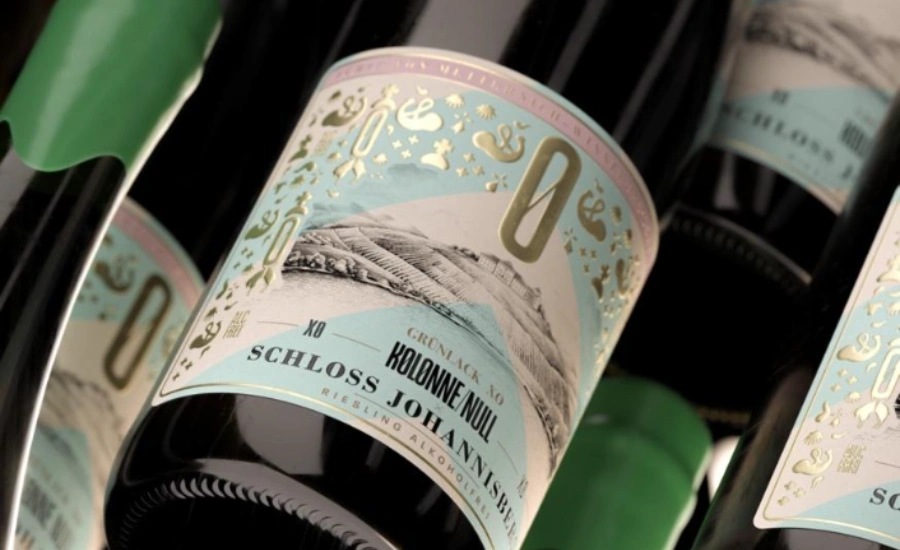 Credit: © Kolonne Null
Kolonne Null in Germany has approached premiumisation by asking how no alcohol wine can earn its own legitimacy rather than simply imitate standard wine. Its collaboration with Schloss Johannisberg on an alcohol-free Grünlack XO, made from reserve wines spanning several decades, is a strong example of that ambition. Born Rosé Barcelona points to a related issue: in premium venues, no alcohol options need to look right on the table, carry a coherent story and feel like part of the same occasion as the rest of the wine offer.
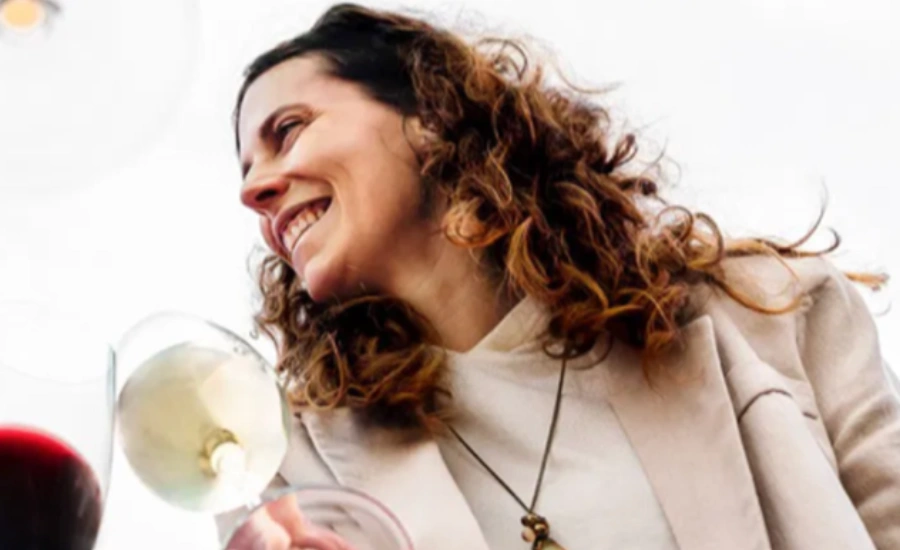 Credit: Katja Bernegger © Zeronimo
Austria-based Zeronimo has pushed the discussion further through food pairing. In work with Michelin-starred chef David Geisser in Switzerland, founder Katja Bernegger has explored what changes when pairing happens without alcohol. The conclusion is not that no alcohol wine should simply copy the role of alcoholic wine. It may need a different sensory logic, with food, texture, fat and aroma working together in new ways.
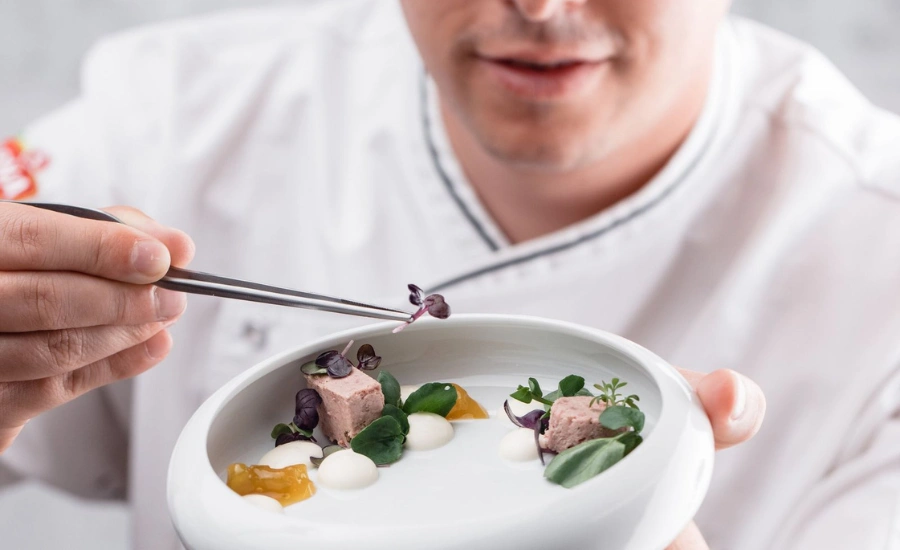
Credit: David Geisser – Michelin Starred Chef (c)Michelin
That is an important shift. The category will not mature by pretending alcohol makes no difference. It will mature by understanding what changes when alcohol is removed, and by building quality, pairing and service around that difference.
Competition recognition is also beginning to matter. Christian Nett, fifth-generation winemaker at Weingut Bergdolt Reif & Nett in Germany, recently won Grand Gold and Best of Show at Meininger’
Mundus Vini Grand Non-Alcoholic Competition 2026 for Breakaway Pinot Blanc, scoring 95 points. Results like this help move the discussion away from whether a wine is “good for no alcohol” and towards whether it is good enough to be judged seriously.
Technology is part of the same credibility question. For years, poor-quality dealcoholized wines created a gap between consumer curiosity and repeat purchase. That is changing. Modern vacuum distillation and aroma recovery have improved the ability to preserve varietal character, identity and balance. The technical challenge is no longer only to remove alcohol. It is to retain enough of what made the wine worth drinking in the first place.
Solos, a specialist in aroma recovery for premium dealcoholized beverages, illustrates how this infrastructure is developing. Its Aroma Recovery System captures and reintroduces original aroma signatures across wines, beers and spirits. Its California facility is now operational, with expansion announced in Chile and Mexico. As Solos CEO Niv Benyehuda has put it, the next phase of no and low alcohol will be defined by quality. For the Americas, that matters because the technical infrastructure for premium no alcohol wine is no longer concentrated only in Europe.
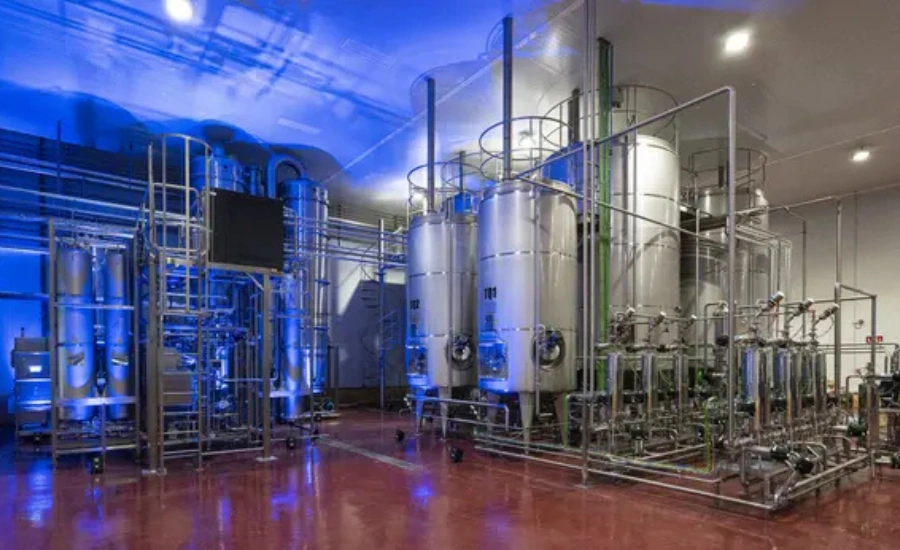
Crédit : © Solos
Rachel Martin, founder of Oceano Wines and producer of Oceano Zero in northern Sonoma County, made the same point from the producer’s side during the Miami discussions. If these wines are to earn a place in premium occasions, they still need to feel like wine. Technology only matters if the glass justifies it.
Hospitality is likely to be one of the most important proving grounds. Not because it is the largest channel, but because it forces the category to answer practical questions quickly. What is the role of no alcohol wine at the table? How should it be introduced? How should it be priced? Does it sit within the wine list, alongside it, or in a separate structure? Does it follow existing pairing logic, or does it require new rules?
The hospitality panel at Vinexpo Americas approached those questions from several angles. Dr Michael Cheng, Professor and Dean of the Chaplin School of Hospitality and Tourism Management at Florida International University, pointed to the education gap. Hospitality schools are beginning to engage with non-alcoholic beverages, but wine still trails cocktails and beer in the curriculum. The next generation of beverage directors is being trained more deeply in mixology than in dealcoholized wine.
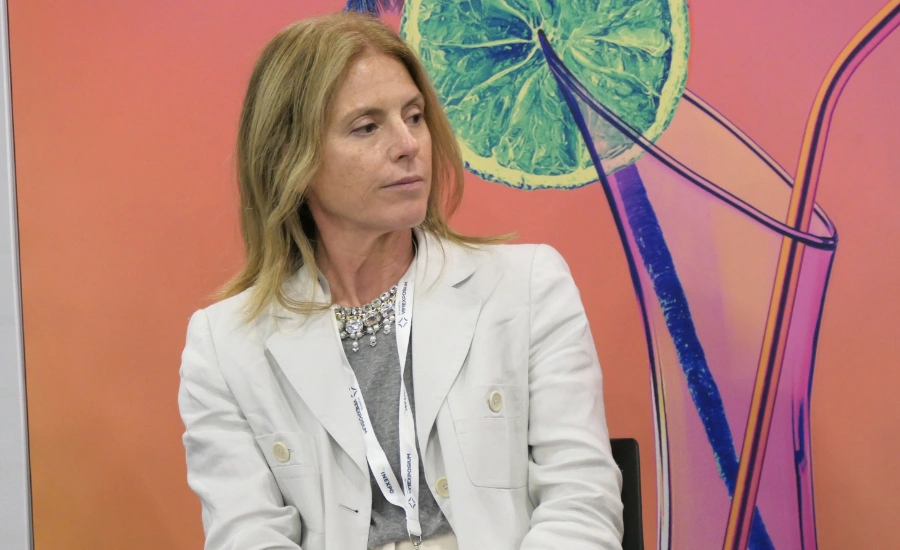
Credit: Rachel Martin, Founder of Oceano (c) Vinexposium
Amanda Fraga, Beverage Director at Genuine Hospitality Group in Miami, gave the operator’s view. Hospitality needs no alcohol options that are “better than free water”: something a guest will pay for, something that appears on the bill, and something a server can recommend with confidence. That point is central. No alcohol wine will not become commercially credible if it is treated only as a courtesy. It has to become part of the business model.
This may be the most important hospitality lesson. A no alcohol wine list built only around inclusion will remain fragile. A no alcohol wine offer built around quality, margin, training and guest experience has a much stronger chance of lasting.
Rachel Martin brought the discussion back to product integrity. If the wine does not deliver varietally, structurally and sensorially, no amount of training or service language will rescue it. Hospitality can support credibility, but it cannot create it on its own.
The US market is moving, but important gaps remain. Buyers are more open to quality-led narratives, and restaurants are beginning to adapt. Vinexpo Americas, with 40% of attendees from Central and Latin America, the Caribbean and the Antilles, also reflected a wider Americas market thinking across occasions rather than within rigid category boundaries.
Still, the language around the category is unsettled. Quality signals are inconsistent. Buyer education is uneven. In hospitality, the offer is still too often either over-explained or apologetic, rather than presented with the same confidence as the rest of the wine programme. Route-to-market strategies also need to become more precise. No alcohol wine, beer, RTDs and spirits do not scale in the same way, and one channel or one narrative will not work for all of them.
The next phase of no and low alcohol will therefore depend less on visibility than on infrastructure. That means trade education, hospitality training, competition frameworks, clearer language, better quality benchmarks and more disciplined commercial thinking.
The category has moved beyond the question of whether it matters. The harder questions now are what quality means, who sets the benchmarks, and how the industry ensures that growth does not outrun credibility.
For no alcohol wine in particular, that is the real test. The opportunity is there, but it will not be secured by momentum alone. It will depend on whether producers, buyers, educators and hospitality operators are prepared to hold the category to proper standards rather than easier ones.
About Irem Eren
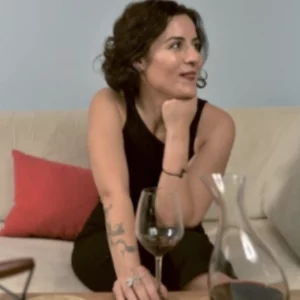
Irem Eren, DipWSET, is an independent consultant, educator, wine judge and Master of Wine candidate specialising in the no and low alcohol wine and beverage category. She serves as Brand Ambassador for Vinexpo Americas. She delivered the keynote address at Vinexpo Americas Miami 2026 and moderated the conference’s hospitality and mindful drinking panel.