

Wine consumers remain engaged but are becoming far more discerning about how they spend their money.
“When I first joined this business 10 years ago, everyone said alcohol was recession-proof. Today, everyone says it is the most price- and income-sensitive category. Well, which one is it?” The question from Rabobank senior beverage analyst Bourcard Nesin captures the dilemma currently facing the wine industry. Consumers continue to engage with wine, yet many are buying less or opting for cheaper bottles. Framing the trend purely as a response to economic pressures, however, risks missing a more fundamental shift.
As Nesin observes, “Even the ultra-wealthy care about value. In fact, perhaps they care more.” Across price points and demographics, consumers are reassessing what makes a wine worth buying.
French economist Eric Giraud-Héraud, whose book “The Value of Wine” was published last autumn, argues that consumers’ perception of value has undergone a paradigm shift.
“There are many attributes that were once thought to be desirable, like aromatic complexity or a mature bouquet, that are no longer automatically recognised for defining and selecting a good wine. Not to mention that growing expectations around environmental responsibility and naturalness have become central to perceptions of value. Far from being based solely on taste, a wine’s value is shaped by a wide range of factors,” Giraud-Héraud says.
He also challenges the idea that lower prices can reverse the decline in demand. “Declining consumption is not due to the price of wine. Cheaper wine would not generate greater demand,” he says, arguing that the industry should focus instead on strengthening wine’s symbolic value.
Demographic shifts are also reshaping the traditional markers of quality and desirability. Nesin suspects that “a lot of the value we ascribe to certain regions is tied to the legacy of the region, its history and a reputation that lives through its consumers and the stories the industry tells. A lot of the people who are very responsive and excited about the terroir and exclusivity of Burgundy or Napa Valley or Barolo are older people.”
As those generations exit the market, they are being replaced by consumers with different cultural and historical touchstones. In the United States, for example, population growth is being driven by Black, Latino and Asian communities, who do not have the same historical connection to Europe’s fine wine regions as previous generations. As a result, Nesin says, “They need a lot more marketing to buy the message.”
 © Bijou Wine
“The £10 to £15 sweet spot”
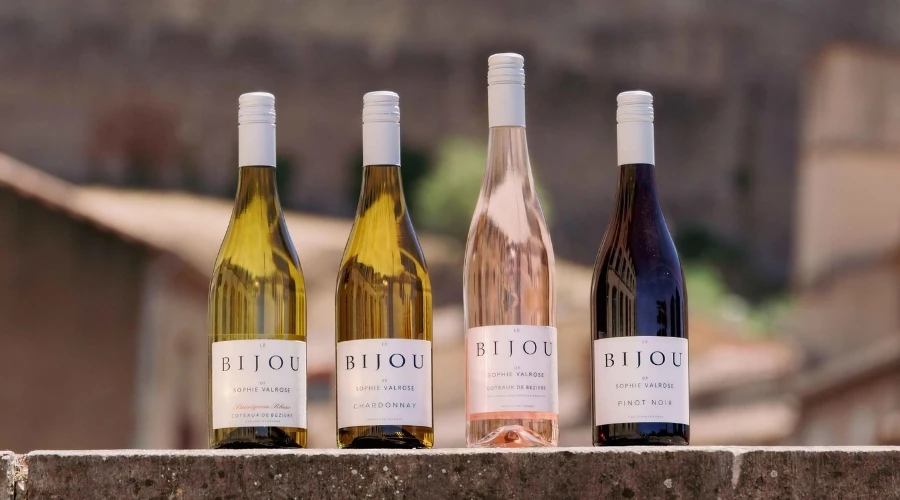
UK industry veteran Chris Ellis of Crush Wines launched his Bijou brand under the byword “luxe abordable”, or “affordable luxury”. But he later moved away from explicitly associating the brand with notions of value or affordability after his marketing team advised him that this would undermine its premium positioning. Now selling around 4.5 million bottles across 50-60 markets, Bijou is deliberately benchmarked against rosés in higher price brackets to benefit from a halo effect.
“We want to be compared and contrasted with brands like Whispering Angel, Minuty, Ott or Miraval. We think of the best Provence wines and want to be in their company,” Ellis says. While the brand aspires to premium credentials, its commercial focus remains firmly on what Ellis sees as wine’s future growth engine.
“We expect demand for premium wine as a whole to climb, with the most explosive growth sitting comfortably in the £10 to £15 sweet spot rather than the ultra-premium £20+ bracket. That is exactly where independent brands can outshine private labels by offering true affordable luxury,” he says.
Crush Wines’ strategy centres on rapid market entry, minimal ageing and on-trend categories such as pale rosé. For Ellis, success is less about complex storytelling than about delivering a product that consumers immediately understand.
“I read a lot about emotional attachments with wine. If it’s good quality, people will become emotionally attached. If they like the label, they’ll buy it. Get the product right, get the price right, get the packaging right, but keep it simple and accessible.”
Ellis believes this straightforward approach is particularly relevant in today’s highly competitive drinks market. “Today’s consumers, whether in a restaurant or a retail aisle, are incredibly discerning. They are making highly considered purchases and gravitating towards desirable brands that mirror their personal values, particularly regarding sustainability and authenticity.”
As wine volumes decline, Ellis expects retailers to become increasingly selective about the brands they support. “Retailers will be consolidating their portfolios to back the winners. They cannot afford dead weight on their shelves. They are actively seeking long-term partnerships with trusted brands that have proven consumer pull,” he says.
Restaurant mark-ups
On-premise channels are facing similar pressures. In a recent survey of sommeliers and restaurateurs, Star Wine List identified the search for value as a recurring theme among both trade professionals and consumers. Founder Krister Bengtsson says establishments are deploying a range of strategies to navigatethe post-COVID-19 market correction and persistent inflationary pressures. These include expanding premium by-the-glass offerings, introducing more accessible bottle programmes, reducing markups on higher-priced labels, replacing expensive classics with alternatives from other regions, and benchmarking prices more closely against competitors.
The aim is to counter declining bottle sales while maintaining value — and the picture is not entirely negative: half of the establishments surveyed saw an increase in wine sales by value last year, with 30% reporting stability, suggesting that consumers are still willing to spend when they perceive the range as good value.
Declining consumption has placed restaurant pricing strategies under increased scrutiny, both for bottle sales and for by-the-glass programmes. Bengtsson, who notes that many fine-dining venues are founded by chefs who view beverages as “an add-on and a source of revenue,” believes the industry needs to have a difficult conversation about reducing markups.
“The margins don’t look the same, but the overall revenue is actually on a par. You see this in restaurants that are totally wine-focused in cities like London; there’s a huge turnover of bottles because they have an interesting selection, and the pricing is very fair for the market,” he says. Price sensitivity is acute at both ends of the wine spectrum: among value-conscious entry-level consumers and affluent collectors alike. As a result, sommeliers are increasingly benchmarking prices before listing new producers or mature vintages to ensure they remain aligned with market expectations.
On-premise venues are also responding to softer demand by offloading inventories: “Some are selling it back to the market, just getting rid of it completely and removing it from their wine lists,” Bengtsson says. At the same time, estates that were once difficult to access are becoming more readily available as producers lower prices and increase allocations. “It will be interesting to see how this plays out, not least with Burgundy. It should affect pricing, I imagine, on wine lists as well as other places.”
Meanwhile, rising prices and changing growing conditions are encouraging consumers to explore alternatives. “Classic red Burgundy has faced a lot of pressure on many wine lists around the world in terms of pricing,” Bengtsson says. “People are gravitating more towards the satellite appellations or leaving the region altogether for lighter reds or whites from other areas.”
Climate change is also reshaping the competitive landscape. Germany, for instance, has seen a clear uptick in popularity with German reds increasingly finding their place on wine lists.
 ©Thomas Sjørup
The benefits of differentiation
More accessible alternatives are also finding their way onto the shelves of high-end independent wine merchants. In France, Caves de Taillevent recently launched its “Quilles du Quotidien” range, with wines priced below €30. Similar thinking is evident in the United Kingdom.
“My customers are not telling me that they cannot afford certain wines any more, but I am encouraging them to consider alternatives. Instead of a Sancerre or Pouilly-Fumé at £22 or more, I might suggest a Quincy, Reuilly, Menetou-Salon or even a Touraine Sauvignon just to give them a slightly better feeling,” says Patrick Jouan, owner of Le Bon Vin in Sheffield, England. Being part of the Cavavin network gives the French-born merchant greater sourcing flexibility.
Rather than competing head-on with high-street retailers on widely available brands, where price comparisons can be unforgiving, Cavavin provides access to lesser-known labels that offer differentiation without compromising on quality.
“I would rather sell good Champagne that is perhaps less well known and then educate my customers to avoid direct comparisons with other retailers. That’s the only way I can compete and survive,” Jouan says. The strategy has become increasingly important as Brexit, the UK’s revised duty regime and Extended Producer Responsibility (EPR) obligations have added significant costs throughout the supply chain, making it harder for independent retailers to deliver value.
Concerned by the rise of anonymous supermarket private labels sourced from the bulk wine market — a phenomenon he describes as “shrinkflation for wine” — Jouan has responded by introducing a small range of lower-priced wines. “I have displayed a dozen or so wines in a specific area of the shop, which I sell for £7 a bottle, compared with a normal price of £8.50. The quality is the same, but I’m eating into my margin because I feel I need to show my customers that I can also offer value wines,” says Jouan, who has also opened a bonded warehouse and uses electric delivery vans to rein in costs.
The pitfalls of premiumisation
Jouan’s experience illustrates how difficult it has become to deliver affordable premium products in an inflationary environment. Yet the segment may also offer some short-term relief as the industry grapples with relevance. As consumers increasingly seek greater value, it is worth asking whether decades of premiumisation have hindered recruitment into the category.
“Prior to the collapse of demand post-pandemic, the push for premiumisation was beginning to impact the market by slowing sales as wine prices increased,” says California-based marketing consultant Paul Tincknell. “As an industry, we talk a good game about wine as an everyday affordable luxury, all the while pricing it increasingly out of reach, especially for younger drinkers. Through our behaviour, we’ve taught the younger generations that wine is a special-occasion beverage. Consequently, they have turned to affordable options such as beer, cider, canned RTD cocktails and hard seltzers for casual gatherings and celebrations.”
Rabobank analyst Nesin agrees that some wineries have pushed premiumisation to the detriment of sales. “I’ve seen brands going over the $20 mark and realised there was an asymmetry between consumer demand at $19 and $21. Traditional economic theory says demand is linear relative to price. So, basically, if we raise prices by 15%, demand drops by 15%. In this case, some brands that have raised their prices by 10% saw demand drop by 20% or even 35%,” he says.
Nesin cautions, however, against viewing today’s market challenges solely through the lens of pricing. “I would feel more comfortable saying that premiumisation has hurt the industry if higher price points were being hit hardest at the client level, but they’re not. Premiumisation has been in a steady state for years.”
One change he notes is the use of GLP-1 medications, which are used to treat Type 2 diabetes and obesity, and their popularity among “older people with money who would normally drink wine.” For these consumers, “their preference for wine has changed, not because the pricing has become unreasonable or the marketing ineffective, but because people are making different lifestyle choices,” Nesin says.
About Sharon Nagel :

British-born Sharon Nagel has been a journalist and translator specialising in wine for 35 years. She writes for leading French online publication Vitisphere and also contributes to corporate communications.