
From choice to serve, mixology to data, a view of how the front line for the spirits market plays out in London’s premium restaurants and prestige locales
In the UK capital, “by-the-glass” is no longer just a serving format: it has become a strategic lever at the heart of the competition between heritage houses and new premium entrants. In a city where consumers are curious, hyper-informed and sometimes fickle, glass-level presence marks the decisive frontier between brands that are merely seen and those that are tasted.
This shift — from visual to experiential, from the backbar to the serve — is redefining the rules of engagement across the entire spirits industry.
Global capital of mixology
As Europe’s mixology capital, London remains a live testing ground for innovation and influence. Trends born here often radiate outwards to the world’s major cities. The city combines ideal conditions: Europe’s richest spirits selection, a cosmopolitan and trend-driving clientele, and a dense network of premium venues blurring the lines between gastronomy, cocktail culture and nightlife.
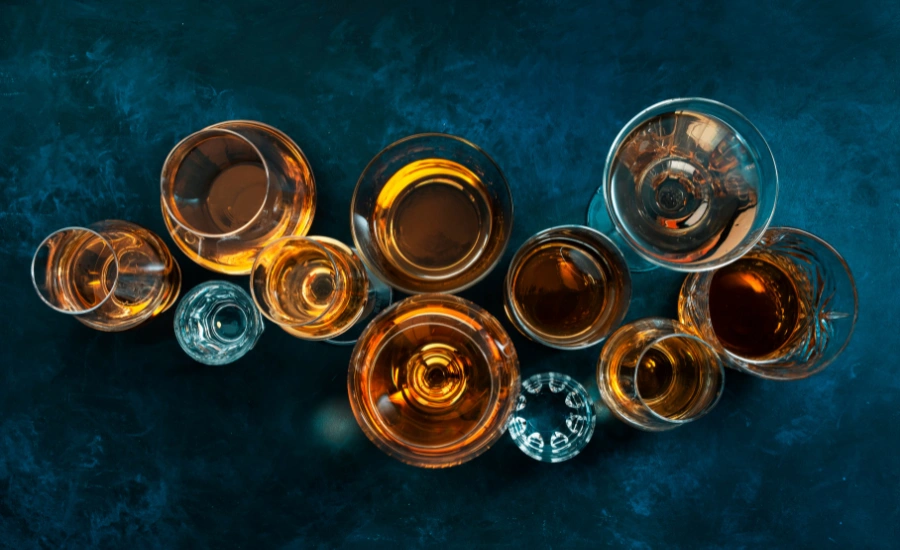 Photo : Adobe Stock
Contrary to popular belief, it is not Michelin-starred dining that sets the tone for visibility. The real stage belongs to venues positioned midway between fine dining and nightlife — places where brand and consumer meet in real time, at the moment of service.
Landmarks such as Boisdale of Canary Wharf (boasting 698 references), Amazonico, Hide, Bacchanalia and 34 Restaurant have become true showcases for spirits. Their influence extends far beyond a mere backbar presence: they actively shape brand preference.
Whisky’s reign, Gin’s allure
Analysis from Wine Services reveals a sharply polarised market structure. Whisky unsurprisingly retains its crown, with 6,694 listings across London venues — sustained by unrivalled depth of range and historical legitimacy.
Yet it is gin that best embodies the dynamism of the by-the-glass format. With 2,525 listings, gin dominates this segment, boosted by its cocktail versatility and approachable image. Vodka (1,680) and rum (1,609) remain well-represented, while brandies and cognacs (1,427) occupy a more heritage-driven niche.
Here, success depends less on volume than on a brand’s ability to activate by the glass — to integrate into a tasting ritual and tell a coherent story in a single moment.
A chosen spirit
Analysis from Wine Services reveals a sharply polarised market structure. Whisky unsurprisingly retains its crown, with 6,694 listings across London venues — sustained by unrivalled depth of range and historical legitimacy.
Yet it is gin that best embodies the dynamism of the by-the-glass format. With 2,525 listings, gin dominates this segment, boosted by its cocktail versatility and approachable image. Vodka (1,680) and rum (1,609) remain well-represented, while brandies and cognacs (1,427) occupy a more heritage-driven niche.
Here, success depends less on volume than on a brand’s ability to activate by the glass — to integrate into a tasting ritual and tell a coherent story in a single moment.
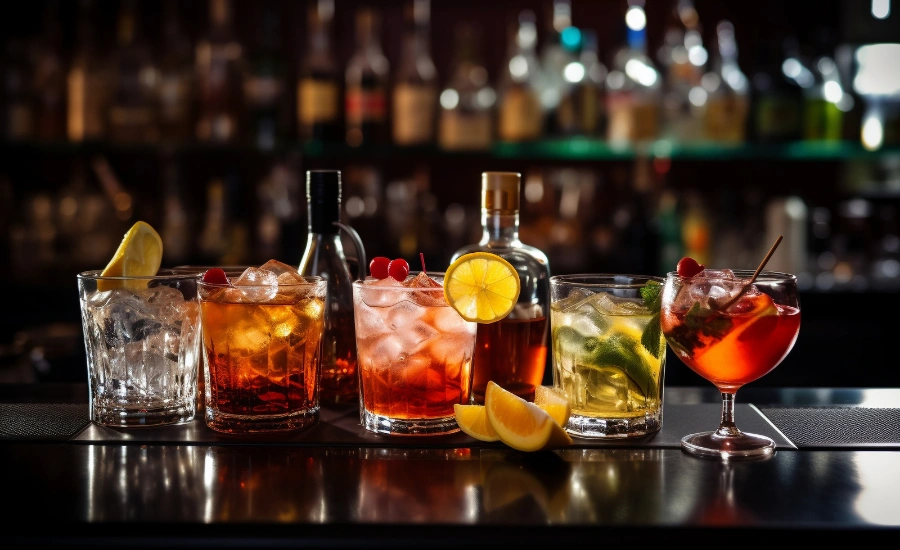 Photo : Adobe Stock
The London landscape is split between two distinct logics: nightlife and premium dining.
In nightlife venues, consumption is emotional, immediate, almost instinctive. Spirits serve as trial products and atmosphere markers. Choices depend on the moment, the theatre of service and bartender recommendation — it’s the realm of spontaneous experience, where premiumisation is expressed through performance and speed of discovery.
In contrast, high-end restaurants follow a more structured logic. Spirits play a supporting, qualitative role, often integrated into pairing experiences or culinary storytelling. Here, legitimacy outweighs showmanship; rarity and coherence define prestige.
For brands, the key question is where to invest: in the fast, prescriptive trial zone — or in long-term, status-driven recognition.
The data weapon
Traditional listing strategies are losing relevance. Targeting Michelin-starred tables alone is no longer enough. Visibility is now built in “frontline venues” — high-volume spaces where the first encounter between brand and consumer occurs.
It is in the buzz of a hotel bar, a restaurant-lounge or an upscale club that consumption habits and ordering reflexes are forged.
The most successful brands tailor their by-the-glass offer to these environments: price points calibrated by venue type rather than category, distinctive service experiences, and messaging that’s clear and immediate. In an attention economy where decisions happens in seconds, shelf presence only matters if converted into an actual serve.
To pinpoint high-potential touchpoints, data has become the ultimate strategic weapon.
Wine Services’ analysis illustrates its power: geo-mapping of top-influence venues, segmentation by venue typology, cross-reading of pricing and image positioning, and benchmarking across competing brands. Together, these tools reveal where visibility turns into real commercial performance.
In a city as dense and fast-moving as London, this real-time reading of the field offers a decisive edge. Actionable data helps brands not only anticipate trends but also identify influencer venues ahead of the curve — and channel investment where impact will be both immediate and lasting.
Precision strategy
The London stage acts as a magnifier: in this hyper-competitive market, visibility can no longer be bought — it must be earned. It is no longer measured by portfolio size or budget strength, but by the precision of strategy.
The winning brands of tomorrow will be those able to align storytelling, activation and data — those who can read the terrain, decode new consumption rituals and turn the act of service into a moment of brand expression.
In London, the world’s cocktail capital, the By-the-Glass battle signals a new era — one where exposure alone no longer suffices. To be visible is a necessity. To be recommended, chosen, poured — that is success.
Source : Wine Services Data
Study perimeter: Data extraction – June 2025, London.
811 brands, 392 venues (including 45 Michelin-starred), 22,709 listings.
About Wine Services :
Wine Services is the leading market intelligence agency in wine& spirit data collection & analysis. We study the presence and pricing of wines, champagnes, and spirits across over 35 markets, 25 countries, 90 cities, at 10,000 top restaurants, 1,250 wine shops, 150 e-commerce sites, auction sales… and all digital and print media outlets.