
Author: World Bulk Wine Exhibition
Escalating freights costs, ongoing supply chain disruptions and shifts in consumer demand are redefining the parameters of the bulk wine trade – driving the emergence of more agile, responsive sourcing models. As logistics settle into a more complex ‘new normal’, we ask Horst Mueller, Global Head of Vinlog at Kuehne+Nagel, how trade routes and supply chains are adapting under pressure.
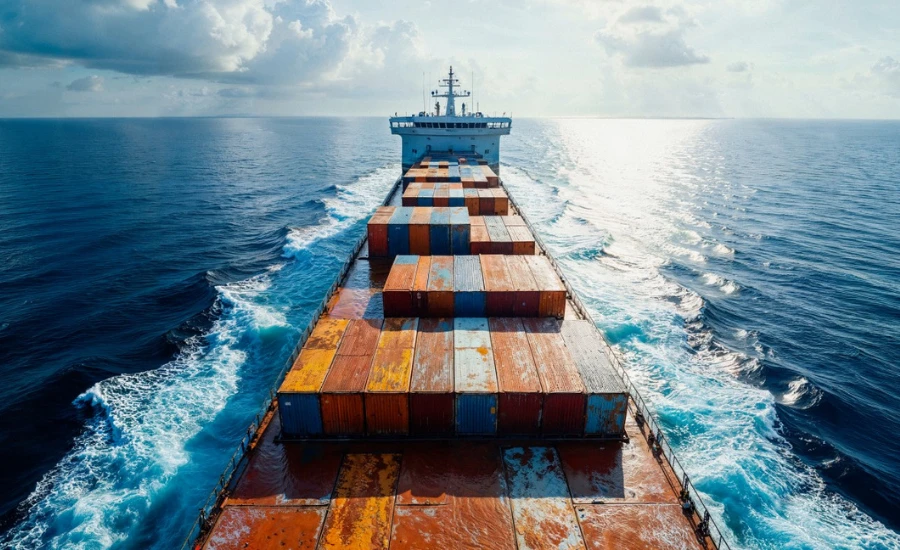
Freight volatility is no longer a cyclical disruption but a structural feature of the bulk wine trade. While ocean freight rates and fuel costs have eased from the extreme peaks of 2021-2022, they remain above pre-Covid levels, reshaping cost expectations across the sector. A combination of tighter environmental regulations, chokepoint disruptions, port congestion and most recently the surge in oil prices continues to expose the fragility of global logistics – both in terms of cost and lead times. Although the conflict in the Middle East does not directly disrupt bulk wine shipping, its indirect effects are tangible. Equipment shortages and renewed freight rate fluctuations are compounding an already strained cost equation for wine.
Crucially, the pressure extends well beyond ocean freight: the entire supply chain is affected, creating a cumulative inflationary effect to which inland logistics add another layer of complexity. Extensive rail and road transport in both supply and destination markets, combined with region-specific pressures such as tariffs in the United States and frontloading mitigation strategies are further driving up costs. “You have to warehouse the product, you potentially have it in the wrong place and then have to redistribute it”, notes Horst Mueller, who is based in the US. “Logistically, the cost burden weighs very heavily on our customers and the wine industry as a whole – and the consumer is not willing to pay for the extra cost”.
Interchangeable origins
Against this backdrop, the question is no longer how to absorb these cost pressures but how to mitigate and navigate them. Operators across the bulk sector are being forced to rethink how and where they source, move and position wine. “For bulk wine in particular, flows have changed quite significantly. It’s becoming extremely price-driven, led by the end consumer who wants a certain wine at a specific price point”.
The continued expansion of private labels has fuelled this shift, enabling a greater degree of interchangeability between origins. Rather than provenance, buyers are prioritising style and cost alignment, calling the shots in a buyers’ market. “From inquiries, we are seeing that origin doesn’t necessarily matter – the wine has to have certain characteristics and hit a particular price point. That’s where freight becomes an integral part of the equation”. Logistics are becoming a lever for optimisation. Cost pressures are driving a shift towards higher-capacity transport formats, with growing adoption of 26,000-litre flexitanks, offering an additional 8% in volume. “We are seeing a clear push in that direction”, Mueller notes, while cautioning that regulatory constraints have to be factored in. “The formats cannot be used in California, for example, because of road restrictions”.
Other regulatory changes are also actively reshaping shipment flows. The introduction of the new duty system in the United Kingdom provided the catalyst for a rethink of long-standing bottling models. “Several customers have changed their approach”, notes Mueller.
“Where they previously bottled everything for Europe in the UK, products are now becoming more UK-specific, with lower ABV levels that are not tailored to other European markets”. As a result, bottling activities are being redistributed across the continent. Facilities in Germany, the Netherlands, Belgium, Spain and Italy are stepping in to plug the gap, while simultaneously adapting their sourcing strategies for dry goods. Geopolitical pressure is indeed redefining supply chains for packaging materials. “Ukraine used to be a fairly large supplier of glass, which is of course no longer the case. Some volumes also came out of the Middle East. In the US, sourcing patterns have shifted with a growing number of bottles now coming out of Mexico”.
Constant adaptation
Asked whether supply chains have shortened in response to sustained cost pressure and disruption, Mueller points instead to fundamentally different procurement models across markets. “In the UK, for example, bottlers typically don’t hold bulk wine on site. The wine is imported, placed in a holding tank then bottled almost immediately – a just-in-time approach. In producing countries such as Germany, by contrast, bottlers are also operating wineries with larger storage capacity and the ability to hold stock on site”. Rather than shortening, supply chains are becoming more variable, shaped by a combination of structural, seasonal and short-term disruptions that require constant adaptation. “Shipping routes out of Australia, for example, are now longer which requires different planning. Services from California are facing disruption due to limited vessel availability, adding up to two weeks to lead times. And seasonal factors also play a role – last year, the pass between Argentina and Chile was closed for almost two weeks”.
Sustainability commitments
As some shippers redesign their supply chains to reduce exposure to long-haul volatility, multimodal and more regionalised strategies are gaining traction. Rail – and increasingly inland waterways – are being used to take freight off the road wherever possible.
“We are shipping wine into Rotterdam or Antwerp and then moving it by barge to inland hubs such as Duisburg, the Frankfurt area or Bonn, reducing final road miles”, explains Mueller. “It adds a little lead time, but we’re talking days, not weeks”.
At the same time, the push towards lower-emissions logistics is accelerating. Electric vehicles are increasingly in demand for last-mile delivery of bottled consignments, while hydrogen remains a long-term prospect. Yet, here too, trade-offs persist. “These low-emission solutions are firmly on our customers’ radar, but ultimately it all comes down to dollars and cents”. While sustainability is being more embedded in regulation and corporate strategy, it continues to compete with commercial realities.
“Some companies remain firmly committed, others less so, but many are still actively looking for green solutions, including recycling options. Quality control tends to want the Mercedes solution, while procurement looks for the Volkswagen – the reality lies somewhere in between. We offer both: full intermodal solutions, combining rail and electric vehicles, alongside more traditional road-based models by truck”.
 Credit: Shipping boat
Higher prices in Chile
In neighbouring Chile, suppliers are unlikely to match many producer countries on pricing this year. Citing a disconnect between growers’ expectations and the commercial realities faced by many wineries, Marco Adam of Ciatti points to elevated grape prices as a key constraint on export competitiveness. “We’re now competing again with South Africa – where suppliers hadn’t been competing with us for three years – and we have no chance of competing with Australia or even New Zealand. With expensive grapes, we will not be able to match prices in any of these three countries”.
Significant vineyard uprootings in recent years – estimated by Adam at between 25 and 30% of total acreage – coupled with more positive sales trends at the time grape prices were set have nevertheless raised growers’ expectations. “It’s good for growers, who have finally seen some relief after five difficult years of selling their grapes at very low prices, and stocks at the end of December were also lower than expected. But globally, sales remain challenging: they are slower than normal everywhere, and Chile seems to be less fashionable than it was 10 or 15 years ago”. The dilemma for Chile in 2026 is one of positioning: Chilean suppliers find themselves caught between rising domestic production costs and a global bulk market that has yet to fully embrace Chile’s move toward premiumisation.
In volume terms, however, prospects appear more positive. Following a favourable summer, with good water availability for irrigation, crop expectations have been revised upwards. “In our last report, I said 850 million litres, but today I would probably say between 900 and 950 million, but still below 1 billion litres”, says Adam. Although “horrendous rain” affected picking in mid-March, the early pace of harvest meant that a large proportion of fruit was already safely in wineries. “Apart from a couple of small wineries, everyone handled the situation very well”. While the short-term outlook remains challenging, Adam is more optimistic about the longer term: “I don’t think the decrease in consumption will continue”.
Leveraging digitalisation
Cost pressures and freight volatility are also expediting the adoption of digital tools across the logistics chain. Real-time tracking solutions now give shippers granular visibility over vessel locations, container availability, temperature control, customs clearance and documentation compliance – turning data into a critical operational asset. “We have customers that are thoroughly planning their supply chain through our KN tools. The digitalisation era of transport is no longer a future trend – it’s already here”. In this context, digital visibility is now an essential enabler of the agility required to navigate a volatile logistics environment. What is emerging across-the-board is a fundamentally reconfigured supply chain for bulk wines where flexibility, precision and proximity matter as much as scale.