
Author: Sharon Nagel
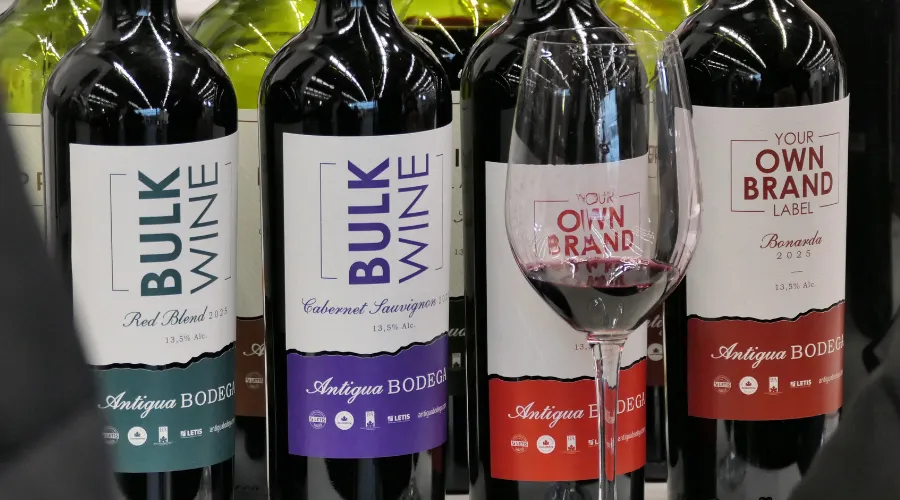
From bespoke bottlings for Michelin-starred restaurants to house wines for pub chains, cruise ships and airlines, private labels are taking on a more ambitious role in hospitality and travel, opening up a sizeable route to market, often with international reach.
You won’t find Muvuca in any supermarket. Launched in January by Rosewood São Paulo – voted South America’s best hotel in 2026 – the exclusive red was developed with local winery Casa Tés through a collective process drawing in teams from gastronomy to marketing and social impact. Its name and sensory profile both celebrate Brazilian diversity. On the other side of the world, the Solaire Resort in the Philippines unveiled its own Grand Cru Champagne this year, crafted exclusively by boutique grower Pierre Boever. Available in extremely limited quantities across the resort’s properties, it is billed as a first for an integrated resort in the country, and part of Solaire’s pitch as a destination for curated, experience-led dining.
Both examples reveal a paradigm shift in how hospitality and travel businesses now view private labels. For years, ‘house wine’ meant the cheapest, least memorable items on the list, often of decidedly questionable quality. But now, hotels, restaurants, cruise ships and airlines are using own labels to build signature selections that reflect their ethos and become extensions of their brand image. At sea, this approach is not necessarily new.
Historic cruise ship operator Cunard has partnered with British fine wine merchant Corney & Barrow for over 25 years on its exclusive private label collection that sits alongside a cellar reserve range of established wines. In fact, premium cruise ships have spent years trying to close the gap between their onboard dining experience and what travellers find in top restaurants on land. Celebrity chef partnerships, carefully sourced ingredients and tasting menus are all part of the upgrade, alongside private label offerings.
Why operators want private label
When effectively executed, hospitality private labels can improve margins while giving operators greater control over a number of key commercial decisions. They avoid comparisons with high-street retail offerings, encourage staff engagement and make choosing easier for hospitality customers who may not feel comfortable navigating an extensive wine list. Private labels are not necessarily intended to replace established brands, but to complement them, giving operators a distinctive offering while retaining familiar reference points for customers. They can also be scaled, catering equally well to boutique restaurants as to multi-venue pub chains.
And importantly, they create an opportunity for storytelling at the table, both on land and at sea. “I love working with producers who have something to say, who want to share their winemaking family stories, their vineyards and their passion. We have a wonderful opportunity to introduce those stories to a very wide audience”, says sommelier Annamari Nikkel, wine and Champagne category manager at AS Tallink Duty Free, part of Estonia’s Tallink group. A case in point is the company’s Champagne selection where it often opts for smaller houses with distinctive character and personal stories over the grandes marques.
Nikkel’s viewpoint is echoed by UK importer Modal Wines: “These projects aren’t about slapping a logo on a generic bottle. They are meaningfully collaborative efforts that build a bridge between the vineyard and the drinker”.
Pricing dynamics
For all these different strands to come together, however, certain conditions need to be met. Prices should be low enough to offer good value for money, but not so low that they undermine brand equity. “I don’t want ship’s wine to be something simple or basic. It should work for someone who just enjoys a good glass of wine, but it should also be interesting enough for somebody who really knows wine”, argues Nikkel. Dmitry Savchenko, managing director of Primare Wines, Spirits & Beverages (PWSB), a private label supplier operating out of Portugal, would be the first to debunk the cheap and cheerful myth of own labels or house wines. “Private-label production volumes are generally much smaller than those of established winery brands. As a result, the production cost of a private label wine is often higher than that of a comparable wine sold under the producers’ existing brand”. Fully customised projects can require production runs of several thousand bottles per SKU, particularly where special blends or non-standard packaging are involved.
There are opportunities to rein in costs, though, he adds: “For smaller restaurants and hospitality operators, we try to find more accessible solutions by using existing wines, standard bottles and established production programmes. This allows customers to test their own brand without making excessive initial investments”. For larger restaurant and hotel groups capable of placing regular orders, there are significantly more opportunities for customisation, says Savchenko, adding: “Our principle is not to encourage customers to order more wine than they can realistically sell, but to find an economically sensible production model that matches the scale of their business”.
According to Savchenko, operators should not see private label simply as a way of securing lower purchase prices, but rather for its “product exclusivity, individuality and the opportunity for customers to establish their own positioning in the market”. Charalambos Lelektsoglou, who founded Inos Wine Service in France’s Rhone Valley in 2021, reflects this ethos. Far from being a vehicle for shifting inexpensive, mass-produced wines, private label can also serve some of the most discerning consumers in the trade.
“I only do small production runs, from 120 bottles to a few thousand, perhaps a pallet at a time. I work with Michelin-starred restaurants, importers supplying the top US sommeliers, wine collectors in Hong Kong and internationally renowned wine bars”, says the fine wine specialist who has over 25 years’ experience in the premium wine and gastronomy sectors.
The pricing dynamics in hospitality are quite different to the usual retail considerations, many of which are no longer relevant. Beyond the absence of direct retail comparisons, Savchenko stresses the flexibility private labels offer hospitality operators. “Unlike mass retail, where the appearance of a bottle often plays a decisive role in the purchasing decision, the hospitality sector offers much greater flexibility in balancing packaging costs, wine quality and product positioning”.
While some operators prefer standard bottles and simple label designs, using the savings to devote a greater share of their budget to wine quality, others view their own wine as part of their premium positioning and are prepared to invest in distinctive bottles, expensive labels and customised packaging, notes Savchenko, who works across supplier countries such as Portugal, Italy and South Africa to offer customers a wide range of categories, price segments and packaging formats. Additional leeway, however, does not mean a licence to supply at any cost: “For 99% of customers, the final product price remains one of the decisive factors. They want a commercially viable solution”.
Consistency, with a difference
At AS Tallink Duty Free, this implies a stringent tender process, followed by a two-day blind tasting involving restaurant sommeliers and dedicated wine experts from the company’s shops, with producer reputation carrying no weight in the final assessment. “With every tender we set quite specific criteria around price, logistics, wine region, grape varieties and style, so we already have a good idea of the role we want each wine to play”, explains Annamari Nikkel.
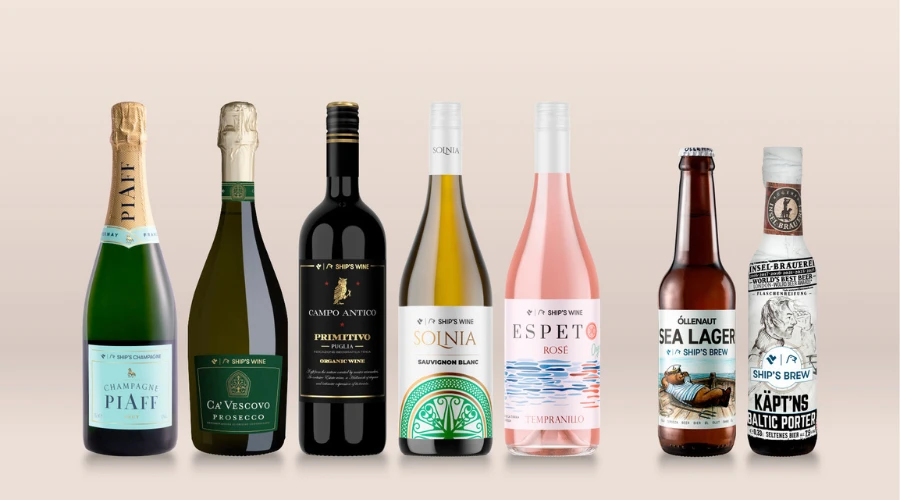
The company calls its range “ship’s wines”, rather than private label. It spans Champagne, sparkling wine, white, red and rosé, with the same selection available across all its ships, restaurants and hotels. Consistency is essential: “Wherever our customers meet our ship’s wines, they should recognise them as part of the same family”. Food pairing, too, is paramount. “Our buffet restaurants are extremely popular, so we look for wines that are versatile enough to work with a broad range of Nordic cuisine. This gives us quite a natural Nordic-Baltic starting point when choosing our wines”.
Savchenko adds some nuance to how consistency can play out in hospitality venues: “The hospitality sector can be somewhat more flexible in its requirements for a consistent flavour profile than major retail chains. A restaurant or hotel may release a new batch of wine under its own label every year, using a different vintage, a slightly modified blend or even a new interpretation of the previous wine. And this is perfectly normal. In fact, such changes can become part of the establishment’s concept and provide an additional opportunity to engage with guests. For hospitality customers, maintaining a consistent level of quality is often more important than reproducing exactly the same taste year after year”.
More than just a label
The UK pub sector offers a telling example of how a new generation of private labels has shed the bargain-basement image of yesterday’s house wines. Star Pubs, the leased pub division of Heineken UK, launched its L’Evento range of premium Italian wines in 2019. It has since extended its own-label selection to include New World wines and Prosecco. Of the 130 wines available to licensees from Star Pubs, 11 are own-label wines, and the company reports record double-digit growth in the category. At sea, AS Tallink Duty Free has been similarly successful. “Our ship’s wines are commercially very important to us. They perform extremely well both by the bottle and by the glass in our restaurants and in our shops. Their share of our wine business has remained quite stable over the years, but at a consistently high level”.
Nikkel is also quick to point out that success goes beyond the bottom line: “What I perhaps love even more is how well recognised the ship’s wine concept has become among our customers. We change the selection every two years on 1 May and already a few months beforehand passengers start asking our staff what the new ship’s wines will be. When people remember the wines, wait to discover the next selection and have strong opinions about their favourites, the ship’s wines have become much more than simply another private label. They have become part of the experience”.
Savchenko believes operators are not making enough of the marketing potential of private label, despite its importance to brand equity. “In my opinion, a private-label wine for a restaurant, restaurant chain or hotel operator is, above all, a marketing tool. I believe this is one of the biggest opportunities for private-label development in the hospitality sector that has not yet been fully explored. Instead of investing heavily in an expensive bottle and elaborate packaging, a restaurant chain could allocate part of its budget to wine quality, brand promotion, professional tastings and international wine competitions. I see private label as an opportunity to turn an ordinary product into a genuine marketing tool for the customer’s core business”.
Factoring in the constraints
Neither should regulatory aspects be overlooked. “Excessive regulation can sometimes limit producers’ ability to develop new products, experiment with packaging formats and respond quickly to market demand”, confirms Savchenko, pointing to administrative restrictions relating to wine origin, labelling and packaging. He advises operators to allow six to nine months for trademark registration, and also points to technical constraints in some countries: “Specialised bottling and canning facilities are limited, and available solutions often involve high minimum order quantities or additional costs. As a result, even a commercially attractive idea may turn out to be economically unviable”. For large hospitality and travel operators, sustainability can also influence sourcing decisions, with bottle weight and transport efficiency becoming important considerations.
Ultimately, a long-term vision and genuine relationships are key to any successful private-label hospitality programme. “I do not believe that the most interesting commercial opportunities necessarily come from customers placing the largest initial orders. What matters much more is whether the customer sees their private-label wine as a long-term project, is prepared to develop the brand and can generate regular sales”, concludes Savchenko, who believes the future development of private label will depend not only on demand, but also on producers’ ability to offer flexible, technically accessible and economically viable solutions.
Stressing the importance of offering smaller producers and brands a platform, sommelier Annamari Nikkel says: “It is quite special to be able to introduce thousands of customers to a producer or family they may never have discovered otherwise. For me that is much more interesting than simply putting another well-known name on the list. And honestly, I am always excited about choosing the next ship’s wines. When the new tenders and samples start arriving it feels a little like Christmas Eve to me. You know there might be something wonderful inside, but you don’t yet know what you are going to discover”.
About the author

British-born Sharon Nagel has been a journalist and translator specialising in wine for 35 years. She writes for leading French online publication Vitisphere and also contributes to corporate communications.