
all news > INDUSTRY

How sommeliers and Masters of Wine shape what we drink

Article - August 26, 2025

In an industry where influence is everything, the sommelier and the Master of Wine (MW) shape wine buying in radically different ways. MWs tend to operate more in a strategic, advisory and commercial capacity, guiding portfolio decisions but also judging, teaching and researching. As front-of-house ambassadors, sommeliers curate wine lists, directly influence consumer choices and, critically, deliver emotions. Both, therefore, require very different qualities.

“People assume that a sommelier needs to be a fount of knowledge but having soft skills is more important,” says Jacques Orhon, a sommelier-turned-lecturer and multi-award-winning author who has just published his latest tome, L’Odyssée d’un Sommelier (The Odyssey of a Sommelier).

As the founder of the Canadian professional sommelier association, Orhon enumerates the key requirements of a successful sommelier: simplicity, humility, open-mindedness and tact, as well as being a good educator and a good listener.

“Your job is to let your customers express themselves then invite them along a journey to find the perfect, or near-perfect pairing,” he says. Beyond that, customers should feel “not only that you recommended a good wine, but also that they had a wonderful time because they felt relaxed and respected.”


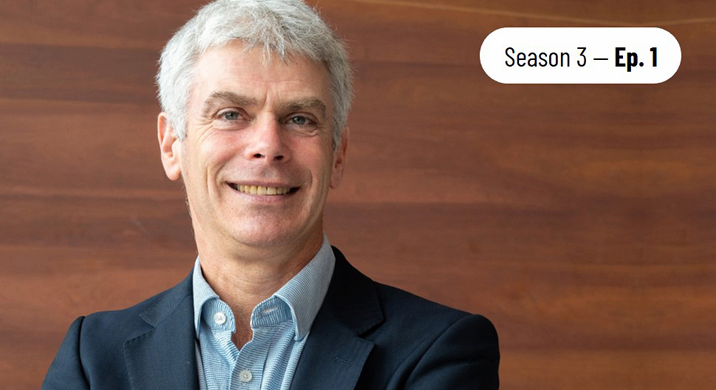
Mattia Ciana, un Master of Wine (MW) regardent droit vers nous en croisant les bras. Mattia Ciana, @mattia Ciana

Soft skills vs strategy

MWs, on the other hand, are much more detached from daily interactions with the end consumer and have greater involvement in system-level decisions. Finnish sommelier-turned-MW Pasi Ketolainen uses the “95-5% rule” to describe the difference between the two roles: “When you’re on the restaurant floor, 95% of your suggestions are accepted because people have already decided to come and spend money.” But for a sales person, only 5% of suggestions are accepted.

One of the first “flight”’ of Finnish MW students in the 2000s, Ketolainen digressed along his path to graduation in 2020 but stresses that “it’s the journey that matters – all the connections created, the doors opened and the opportunities.” Not to mention the organisational skills required to overcome such a gruelling selection process. “I think the pass rate is around 10% and it’s quite an investment, too. You need to move way out of your comfort zone and at the same time be the kind of Navy SEAL of the wine industry.”

Ketolainen describes the MW studies as a “360 degree approach where, even though you understand how a wine is made, you also have to understand why it is valid. So, how do you market it and communicate to consumers? In a world dominated by TikTok, where the maximum concentration span is around 15 seconds, that has become much harder.”

From wine lists to whisky barrels

As wine intrinsically evolves – alongside consumer habits, tech tools and global markets – these two elite roles are experiencing a step change and increasingly overlapping. Mattia Cianca, who is Best Sommelier of Italy and Australia, epitomises this transformational shift. Like countless other wine professionals, he didn’t set out to become a sommelier.

“I was working in a restaurant in Australia which had around 500 wines on the list, 90% Italian, and I felt embarrassed that I didn’t know anything about them,” Cianca remembers.  Wholeheartedly embracing the steep learning curve, he took part in major sommelier competitions. “Every time, I would think, why am I doing this to myself? But it was a way of getting to know myself and becoming a better professional. If you can stand such global scrutiny, working in a restaurant – even a Michelin-starred restaurant – is a walk in the park afterwards!”

Covid proved to be a turning point. “I was working as a sommelier in northern Italy at the time and had to find another occupation. After 11 years in Australia, it made sense to connect my knowledge of European producers with my network of Australian importers.” Since then, his Bordeaux-based business has picked up speed and branched out from exports to imports and even trade in barrels. “I was asked to look for freshly-emptied barrels, mostly barriques from Italian wineries, for distilleries to mature or flavour whisky.”

Drawing on his sommelier skills, he continues to tell the story of the wine and the winery, but to sell barrels, leveraging the art of diplomacy he developed previously. “The secret of selling is not selling,” he insists.

Spanning different continents, including India where he co-founded the Indian sommelier association, has given him unique insight into the industry and its practitioners. And he notes that it is hard to generalise about the role of a sommelier because it is very country or region-specific. “Wine education is so much stronger in English-speaking countries than in wine producing countries, where sommeliers are very fluent in their own wine cultures, but very weak outside. Also, in the New World, sommeliers in charge of a programme have more of a sense of business. There is more involvement and more openness to make decisions,” Cianca explains.

“Merchants of happiness”

As the wine world grapples with economic pressures and shifting consumer habits, long-held traditions and education models are increasingly being questioned. “I think we’re very dogmatic in the wine industry in general,” says Ketolainen, who created an award-winning “progressive” wine list. “It immediately increased the average price of the wine, but customers were happy with it.”

Cianca, who sees significant room for improvement in wine-by-the-glass programmes, also offers a pragmatic approach to wine list design. “The most exciting wine list to put together is the smallest because you have to offer something totally exclusive. A super smart wine list is also easier to read, manage and make money from. And it saves time because it’s easy to train staff to use it,” he says.

With rising mark-ups, staff shortages, unsociable hours and increasingly tech-enabled customers, many sommeliers are branching out, diversifying their roles, pivoting to consulting, importing or education. Yet in a world growing more transactional, there’s still space for the human touch.

“At the end of the day, the sommelier is a ‘merchant of happiness’ taking customers along a journey of wine knowledge so that it can be better shared,” Orhon says, reminding us that hospitality, at its best, is still an act of generosity.

About Sharon Nagel :

British-born Sharon Nagel has been a journalist and translator specialising in wine for 35 years. She writes for leading French online publication Vitisphere and also contributes to corporate communications.