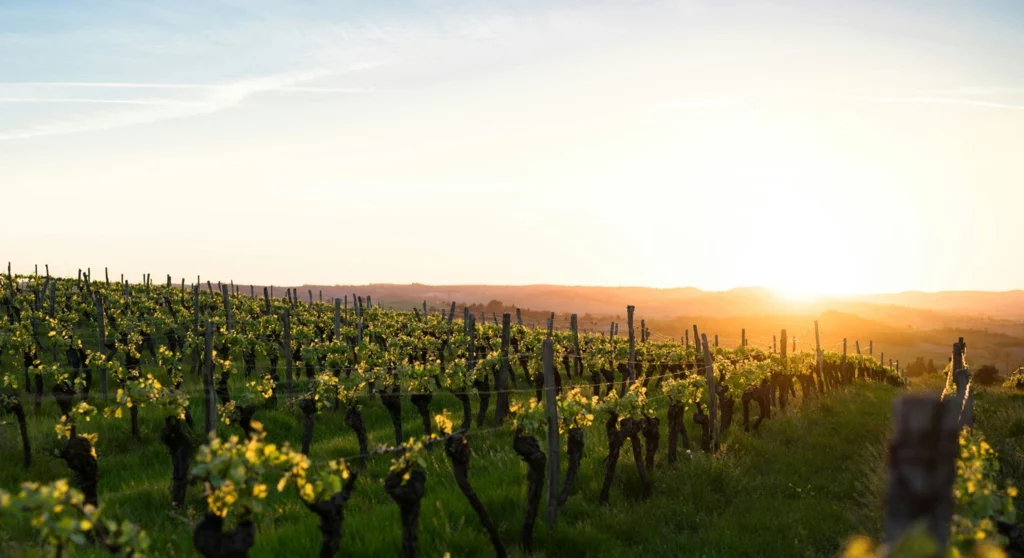

The new imperative of regenerative viticulture
In the face of the earth’s ecological crisis, the Regenerative Viticulture Foundation (RVF) aims to restore the vineyard landscape with a focus on rebuilding living soils and enhancing biodiversity into integrated natural ecosystems.
As many as 90% of traditional wine regions could disappear by the end of the century. This stark forecast was presented by Professor Paul Behrens at the Sustainability in Drinks Conference in London in October, quantifying the potential impact that climate change could have on the wine industry as a whole.
This reality highlights a shifting set of challenges that are becoming more pressing for grape-growing, and therefore for the ‘sustainability’ of the wine industry in all senses of the word. We see the local impact of this global phenomenon every day, including erratic and emergency weather patterns of drought, floods and fires.
We are also seeing increasing awareness and relevance to governments, society and consumers, especially given that wine is now, more than ever, a luxury rather than a commodity.
So what does this mean for grape-growing? Given a shift away from commoditisation, the agricultural practices employed to focus on maximising yields become less relevant. Quality and value, respect and legacy: these are the watchwords of today’s best viticulturalists.
We are seeing tactical short-term approaches giving way to a more holistic idea of viticulture in which the vineyard is recognised as a living ecosystem, with a focus on long-term soil health and resilience to climate change. That transformation is the heart of what we call regenerative viticulture, which is fast becoming the new face of quality wine-growing.
The ecosystem factor
So what is regenerative viticulture? The question seems simple, yet the answers vary. Some frame it as a return to traditional, low-input methods. Others worry that its breadth leaves room for greenwashing. The Regenerative Viticulture Foundation (RVF) offers a clearer compass: regeneration is about restoring the vineyard landscape: rebuilding living soils, enhancing biodiversity and integrating natural ecosystems, so that grape-growing becomes part of a healthy, resilient whole.
Regenerative viticulture is therefore less a list of techniques and more a mindset. It builds on many principles shared with sustainable, organic and biodynamic farming, with a focus on outcomes, particularly soil health. Key practices include keeping permanent and diverse cover crops, reducing tillage, integrating livestock, enhancing below and above-ground biodiversity and tailoring decisions to each vineyard’s ecology. In other words, it is not about meeting minimum standards but about restoring as much natural functionality as possible while producing a healthy and balanced crop.

How Regeneration works in practice
The impact of this shift becomes clear once a vineyard stops being treated as a production surface and starts being managed as a living, responsive system.
Water: holding, slowing, protecting
Healthy, structured soils resulting from living roots and cover crops significantly increase water infiltration. Rainfall enters the ground rather than running off and taking valuable topsoil with it. This allows soil to store moisture for dry spells, which can be a crucial advantage as drought risk intensifies. Studies show regenerative vineyards can store 2.3 to 3.4 times more soil carbon, which directly increases water-holding capacity.
Shaded soil also stays cooler in heat spikes. Diverse plant cover and trees reduce soil temperature, lowering stress on vines and their microbial partners during extremes. In effect, regenerative vineyards become natural water-management and temperature-buffering systems.
Biodiversity: rebuilding the ecosystem
Regenerative practices actively encourage polyculture. Flowering plants support pollinators; hedgerows, bird boxes and uncultivated patches bring back insectivorous birds; uncropped areas and varied rooting depths break up compaction. These ecological layers help reduce insecticide use by enabling natural pest regulation. Research cited by the RVF shows regenerative vineyards support dramatically richer soil life: 26 times more protists, three times more nematodes, and nearly 30 times more microarthropods than intensive systems.
Above ground, the return of beneficial species reduces dependency on agrochemicals and promotes healthier fruit quality. Below ground, organic matter and microbial activity increase nutrient cycling, long-term fertility and carbon sequestration.
Carbon and soil health
Regenerative practices, including compost, manure and biochar additions, consistently build soil organic carbon. In broader agricultural studies, such practices have been shown to raise soil carbon by up to 159% and yields by up to 29%. For vineyards, the evidence base is still developing, but trends are clear: more carbon, more structure, more life and more value.
Why now?
There are several converging forces that explain the current focus on regenerative viticulture. Climate volatility is pushing vineyards to seek resilience rather than simply chase yield. Carbon has become the key reporting metric in both corporate governance and agriculture, and regenerative systems offer tangible mitigations for the rest of the supply chain. Retailers are demanding evidence of environmental progress, while consumers increasingly want wines that reflect ecological responsibility with the terroir in a meaningful way, while reflecting their own values and principles.
Growers, too, see the potential benefits: reduced input costs over time, healthier soils, improved fruit quality and long-term operational stability. Regenerative vineyards often demonstrate faster post-drought recovery, lower erosion and more stable yields in challenging seasons.
Transitioning to regenerative methods can involve initial investment and, in some cases, short-term yield dips. Yet the longer-term economics are compelling: fewer synthetic inputs, more resilient vines, enhanced brand value and potential access to carbon or biodiversity markets and retailer insetting as these mature. Crucially, there is growing evidence that regenerative practices can also improve wine quality.
Barriers remain, particularly around transition costs and the lack of consistent definitions and certification standards. To address this, the RVF compares the available regenerative certifications to help producers understand their options.

Pathways to scale
The RVF’s One Block Challenge™ offers a practical starting point. It invites growers to trial regenerative practices on a small area, which both reduces risk and contributes to shared learnings. Launched in Paso Robles, where 47 producers now participate, it has expanded to South Africa, the UK and New Zealand, with upcoming launches in the U.S. and interest from Europe and South America. The RVF has set an ambitious target: 10% of the world’s vineyards to be farmed regeneratively by 2035.
Technology is also accelerating change. Real-time soil nutrient sensors, acoustic probes, ecological mapping, drone-released beneficial insects, robotics and precision tools are helping growers farm with nature, not against it. This combination of ancient principles and modern tools is redefining what high-quality viticulture can look like.
Regenerative viticulture offers a pathway not just to sustainability, but to renewal. Vineyards become living, resilient systems that store carbon, support biodiversity and bring ecological health back into the story of wine. The evidence points clearly to healthier soils, greater climate resilience, and the potential for improved quality. It is a collaborative movement in which the focus is on the land in which our industry is rooted, and in which everyone can play their part, no matter their location, language, role, commercial context or philosophy.
For growers and wineries, the next step is simple: start small, measure carefully, learn continuously and join a movement that places terroir, ecology and resilience at the heart of wine’s future. Regeneration is not about perfection — it’s about progress, one block at a time.

About Anne Jones:
Anne Jones is a wine industry sustainability consultant, with Limestone & Jones. She is a Director of the Regenerative Viticulture Foundation and also consults with WineGB and Sustainability in Drinks, along with other clients such as the Wine Society, Chapel Down, Gusbourne and Levy’s (Compass Group). www.regenerativeviticulture.org