
An estimated 14% of the carbon footprint of wine comes from the process of transporting it around the world. There are ways to reduce the impact now.
Why do logistics matter to someone like me who works on sustainability in wine? You might expect that I’d be focused solely on reducing chemical inputs in vineyards, increasing energy efficiency inside wineries, protecting the working conditions of those hired harvest the grapes. It’s true, those challenges are all key to sustainability.
Yet the reality is that some of the less visible pieces of the sustainability agenda can make a remarkable difference. And when it comes to the environmental impact of wine, the logistics of how it gets from grower to drinker is crucial.
The evidence is clear: an estimated 14% of the carbon footprint of wine comes from the process of transporting it around the world. That’s just below the 19% that comes from the much talked-about impact of the agricultural phase of wine production.
Thus an important challenge for sustainability advocates in the wine industry is to better understand, measure and explain the role of the supply chain in reducing the environmental impact. Over the past year, the Sustainable Wine Roundtable has been benchmarking the more than 40 sustainability standards in wine. Most of these effectively address such issues as energy efficiency and water management, and many also deal well with human and social issues. The piece almost all fail to cover is what happens beyond the winery gate.
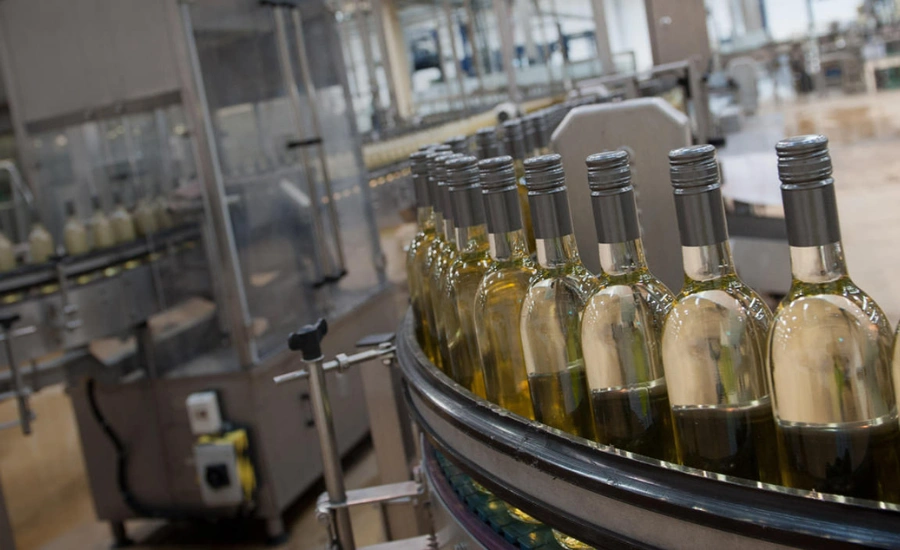 Photo : (c) ENCIRC
The bulk question
So what can be done? How can the wine sector reduce emissions associated with wine logistics? The most obvious answer is bulk shipping, where wine is transported in what is known as a flexitank – effectively a giant bag-in-box – that is itself inside a shipping container. The wine is then bottled in the destination market, often at locations well situated for easy onward transportation. An example of this Encirc’s facility in Chester in the north of England, whose bulk shipping operation accounts for about one-third of all the wine sold in the UK.
Globally, bulk shipping has quietly become a very significant component in global wine logistics. According to the international wine organisation, the OIV, 2024 saw a 3.3% increase in volume and a 9.8% rise in export value compared to 2023. Bulk shipping therefore represents 34.7% of total world wine volume exports.
The beneficial environmental impact of bulk shipping is significant. A report by the Waste Resources Action Programme (WRAP) showed that transport emissions can be reduced by more than 30% by importing in bulk rather than bottling at source. This number varies to some degree, with higher carbon reduction over longer distances. The savings accrue for a number of reasons. Firstly, a significantly greater volume of wine can be transported within the same space when moved in bulk rather than by bottle. A standard container loaded with bottles can hold only 41% of the volume of wine shipped in flexitank. Ultimately, bulk methods transport in weight and space almost exclusively the wine itself, rather than having to move heavy, typically glass, bottles.
Bulk shipping, moreover, not only has sustainability advantages, but also significant cost savings.
At a recent conference in Australia, for example, a biodynamic-certified New Zealand producer estimated that making the change to bulk had led to savings of more than 20% in shipping costs. Anecdotal evidence from some other SWR members suggests that there are meaningful cost savings to those who bulk ship their wine.
Still, many wine businesses continue to choose not to bulk ship. Tellingly, the OIV analysis says that whilst bulk transportation accounts for more than one-third of the total volume of wine exports, it only accounts for 7.4% of the total financial value of those exports.
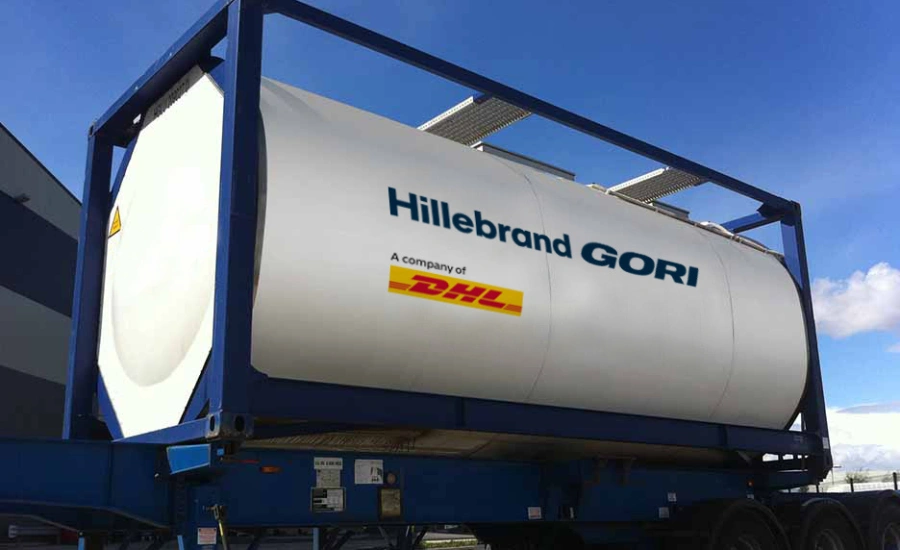 Photo : bulk solution isotank (c) Hillebrand GORI
“Marketeers have succeeded in persuading at least some consumers that ‘chateau bottled’ wines are somehow of better quality than those bottled elsewhere.”
Clearly, many wine makers, especially those in more premium segments of the market, continue to pack their wines at source and then ship their bottles to the retail market. The reasons for the resistance includes the perceived marketing value of the phrase ‘mis en bouteille au chateau’ on a bottle. Marketeers have succeeded in persuading at least some consumers that ‘chateau bottled’ wines are somehow of better quality than those bottled elsewhere.
There are nonetheless other perfectly valid reasons for bottling at source. It does allow a wine maker greater control over the wine and enables last-minute changes, for example on sulphur levels. In some locations, the employment provided by bottling plants is an important part of the local economy.
Regional collaboration
Even if a winemaker continues to bottle at source, there is still much that can be done to address the environmental impacts of transportation. It requires thinking proactively about changing processes, and building awareness of sustainability into all decisions about logistics.
Producers in wine-growing regions are increasingly collaborating to address logistical issues as part of their sustainability approach. An efficient transport chain is likely also to be a more sustainable one, and wineries working together can facilitate this. In the northern Italian Langhe DOCG, whose regions include legendary names such as Barolo, Barbaresco and Alba, a consortium has developed a programme to coordinate logistics amongst its members using low-emission vehicles. Traveling the shortest possible route and always fully loaded, these ecological vehicles collect orders from cellars and take them to a hub, from which they subsequently are sent to destination markets. This collective approach also means that containers are shipped full, contributing to economic efficiency, better sustainability outcomes and even an extra boost to drive wine tourism into an area less disturbed by heavy vehicles.
Part of the challenge for wine makers in striving for more sustainable logistics is that the choices about how to transport wine are not always in their hands. In many cases, the shipping of wine is handled by a trader or end retailer rather than the maker. To that end, SWR is beginning to work with one of our members, logistics provider Hillebrand Gori, to develop clear guidance to all in the wine value chain about how to drive more sustainable shipping practices.
No rush
The most obvious step is to halt any use of air freight for wines. Use of air transport makes sense for perishable goods, for example the export of green beans from Kenya to Europe. Wine simply does not need to be rushed to market.
There are nonetheless nuances in the quest for efficiency of the route from source to destination. We all know that Amazon has a complex system for saving time and cost to get orders through multiple locations before arriving on our door step. Good logistics planning for wine means balancing a reduction in the number of steps in a consignment’s journey with ensuring that each shipment has the fullest possible load.
Wine transport should also rely more and more on shipping companies that are using a technique called ‘slow steaming’. This is a deliberate reduction of the cruising speed of a ship to reduce fuel consumption and pollution from emissions. Experts estimate that halving cruising speed to between 12 and 19 knots can reduce fuel consumption by almost 40%. This has significant cost benefits as well as reducing GHG emissions. Shippers can also make use of prevailing tides and currents to reduce fuel use.
Also, once bottles arrive in destination states and countries, there is much that can be done to reduce environmental impacts. Rail transport has much lower impacts than road freight and should be used wherever possible. In the ‘last-mile’ delivery, perhaps from a rail head to a retail store, low-emission trucks and vans should be used. If these are not available, training drivers on efficient driving techniques can reduce emissions of traditional vehicles.
As with many topics in wine sustainability, there is no ‘one size fits all’ approach to logistics. Bulk shipping is highly effective in reducing impacts, but for those who continue to bottle at source, other options are available to lower their carbon footprint. The key for any forward-thinking wine business is to constantly seek new ways to optimise for sustainability and cost efficiency. You’ll be surprised how often you can find solutions that do both.
About Sustainable Wine Roundtable
The Sustainable Wine Roundtable is a membership organisation focused on driving sustainability in the wine sector globally. Our members cover the whole supply chain including growers, retailers, standards bodies, bottle makers and traders, and are drawn from all over the world.