
Surplus strategy: Why full tanks are a unique opportunity to innovate and recalibrate the industry
It’s tempting to view the current global oversupply as a shortcut to winning back consumers through lower prices. But this moment offers a longer-term opportunity to rethink how wine is made, packaged and positioned — to turn necessity into lasting innovation and reinvention.
It’s an open secret that as tanks around the world brim with unsold inventories, wine prices – particularly in on-premise venues – remain stubbornly high, potentially fuelling continued market contraction. Californian marketing expert Paul Tincknell is still waiting to see a new wave of creativity that should come under current market conditions. “In the past, with most of these downturns, we usually see a cycle of innovation happen where new entrepreneurs see all this wonderful and expensive wine they can play with and create new brands. And we are not seeing that happen, at least not to any major degree yet.”
Same oversupply, new dynamics
This is not the first major imbalance of supply and demand the industry has known, though its global scale sets a new precedent. “The oversupply of 2000 to 2008 drove millions of gallons of wine to be exported at extremely low prices, creating an opportunity to develop brands internationally,” recalls Californian consultant winemaker Nicholas M. Karavidas. “I remember shipping a million gallons of dry white wine to Vincor in Canada for $1.10 a gallon to basically just dump oversupplied wine.”
Still, Karavidas acknowledges that “the dynamics, balances and driving factors are all different than they were in the previous ups and downs.” Inflation, for one, has pushed overheads so high that many producers around the world will have harvested this year at below cost, or left fruit on the vine, removing any leeway for marketing investment. Aside from the cost issues, there are obvious long-term implications of releasing large volumes of lower-priced wine into the market – margin erosion, brand devaluation and placing a strain on already fragile grower and distributor networks.
Doing the maths
There are also short-term financial implications: “I’m going to venture to say that up to 30% and more of the 50 million gallons of bulk wine that’s on the market in the United States is never going to go anywhere. The wine in tanks is the foundation for wineries’ loan structures and credit lines. So they can’t sell what’s an $8 value or a $12 value on their books for their bank for $2, which is the offer on that wine.”
There is also the realisation among market players that whilst double-digit percentage margins may look good on paper, they are only as profitable as the price of the wine: “At a 35% margin, a $36 FOB is a different dollar value, mathematically, than a $75 or $100 FOB. Retailers especially were lured into very low pricing with great margins, but it didn’t balance out to dollar value and spendable revenue. By the time they realised it, they were losing money on their profit per square foot of retail merchandising. And now everyone’s in trouble.”
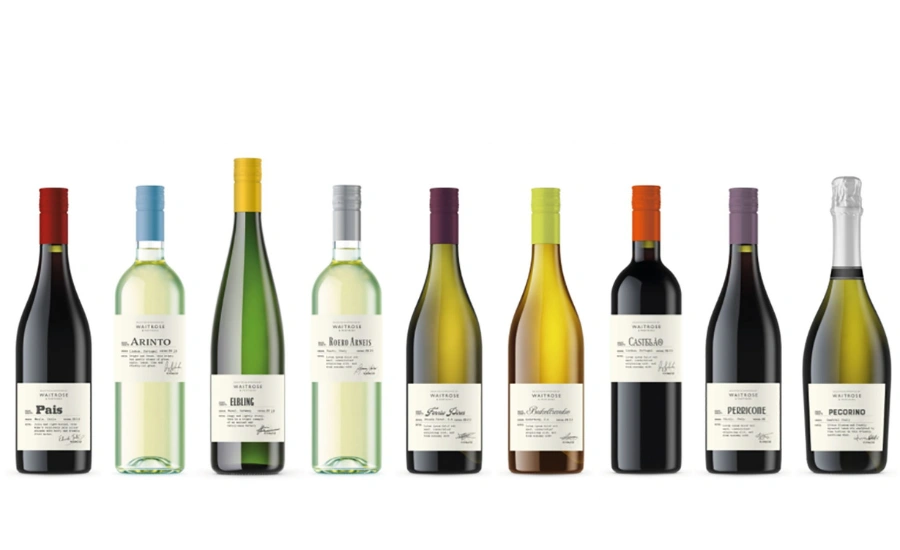 Photo : JV 2024 No Vintage Lineup 6up (C) The Wonderful compagny
Premiumisation, too, which has been high on the industry’s agenda for many years, becomes vulnerable. “The big corporations, brands and distributors realise that if they come in with a killer $20 Chardonnay, it might collapse the market for their $35 Chardonnay and the margin is much better on the $35 Chardonnay,” says Tincknell, who also feels that “corporatisation” of the industry is stifling innovation.
“The big companies such as Gallo or Constellation are very focused on the bottom line, and look at cost-cutting measures and divesting themselves of brands that are not performing well, then pouring more and more money into existing and performing brands, rather than cycling through and using the extra juice to, say, create a $30 box wine that will fill a strong market need.”
Birth of a behemoth
Despite consolidation at every level of the supply chain, oversupply remains fertile ground for innovation. Karavidas cautions, however, that new ideas must come with “pre-emptive forethought on how to get to daylight and profitability when you’re selling wines extremely cheaply.” There are multiple examples of brand blockbusters born out of oversupply, probably the best known of which in the U.S. is Bronco’s Charles Shaw or ‘Two Buck Chuck.’ “It was a product of that oversupply between 2000 and 2008. I remember seeing nine-page contracts to purchase 250,000 gallons of Napa Valley Chardonnay for 50 cents a gallon.” The brand remains as relevant today – even though 20 years on it would be fairer to call it ‘Four Buck Chuck.’
Buyers can find whatever they want and start a private label. But if you’re capitalising on the amazing deals available, there’s the need to maintain a consistent product if you’re going to find commercial success.
Bulk wine broker Adam Schulz of the Incredible Bulk Wine Company in Washington State has similar recollections: “There’s a famous buttery named Chardonnay in the U.S. which started out when they just bought lots of bulk wines available on the grower market, gave it a buttery name and it took off like wild fire,” he recalled. “So they hired a winemaker and viticulture consultant, had a pre-harvest plan the following year and grape contracts to build it from the ground up to ensure a consistent style.”
Schulz says in the current buyers’ market, there could be similar opportunities, but also potential pitfalls. “Opportunistically, buyers can find whatever they want and start a private label. But if you’re capitalising on the amazing deals available, there’s the need to maintain a consistent product if you’re going to find commercial success. The greatest risk of the death of a private label is if you’re not able to keep the juice consistent in the bottle.”
Private label edge
Private label is undeniably one of the most promising opportunities for absorbing the current oversupply of wine, ticking many boxes including the preservation of brand integrity. “Somewhere between 50% and 60% of the European Union’s retail wine is private label into the major chains, the Tescos and the Asdas,” explains Karavidas. “We’re roughly 10-12% in the United States, but we’re going to move very quickly. Private label is going to be a big swath of this inventory as retailers in the U.S. very much embrace their control.”
Schulz concurs: “Private label is a good way to siphon off oversupply and develop stronger retail relationships, perhaps in a stronger sense than with your own label.”
The current dynamics of the U.S. market make European suppliers particularly well positioned to leverage the private label business. The share of imports since the last major oversupply period has surged from around 12-15% to as much as 40%, with pre-tariff stockpiling compounding this trend. “There’s upwards of 70,000 to 100,000 acres of vines that have been removed out of California now. That’s potentially 700,000 tons of grapes that don’t exist anymore, which is roughly 25% of the grape market for wine,” says Karavidas. “What’s key is that most of the vineyards are in the Central Valley and Northern Interior – that’s where the $6 to $15 price point comes from in California. We cannot replace those grapes for that price point out of the coastal regions, so those wines are going to come from importing, and this is still going to be mainly France and Italy, despite the tariffs.”
Fresh money, new perspectives
The categories where many see opportunity to capitalise on the oversupply include niche varietals, white wines, specialty wines, RTDs, no-lows and different packaging formats, particularly single-serve in an era of moderation and a growing need for responsibility within the industry. But Karavidas says there are caveats: “There is a chasm between market demands and supplies. What the market is demanding and what is actually available are slightly, if not completely, different.”
Also, leveraging those opportunities requires capital. Aside from the large players “always ready to jump in where there’s an opportunity to move inventory,” Karavidas says some of the funding may well need to come from outside the industry. Among the potential sources, he cites companies like the Californian food giant Wonderful, which owns the Justin Winery in Paso Robles and is looking to add other wine producers to its portfolio.
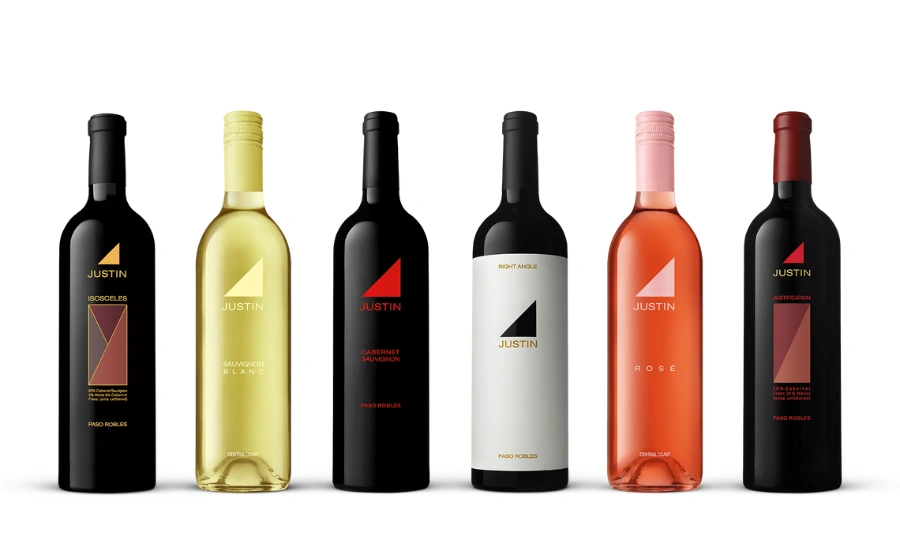 Photo : Waitrose « Loved and Found » (c) Waitrose
Schulz shares a similar view: “It feels like the companies that are growing and are successful in this upside-down wine market tend to be from outside the wine industry. They have a unique viewpoint on what the packaging should look like or what the message should be. They’re not stuck on the traditional model and they’re able to capitalise on private label or new label development or new concept packaging development and are finding quite a few suppliers willing to help them.”
Celebrity brands are one piece of this puzzle. But within the industry itself, companies are scrambling to grasp opportunities which Karavidas says may not happen again for decades. “Russian River Pinot Noir producers selling for $4 a gallon aren’t just going to make wine again and look to sell it on the bulk market when pricing is that low. I’m saying we’ve got a window of 18 to 24 months when we’re going to skid along the bottom and then be faced with reality: What does it cost to grow grapes and make wine? And then we’re all going to get a lot smarter.”
Turning flexibility into opportunity
In the UK, supermarket chain Waitrose launched its ‘Loved and Found’ range based on the concept of one-off parcels. Its former global bulk wine sourcing buyer, Barry Dick MW, comments that “Increasingly you will see retailers set up ranges like this. I don’t think the oversupply of wine is going to go away any time soon, especially at entry-level.”
Fellow British wine importer and distributor Boutinot is also scrutinising potential opportunities afforded by excess inventories: “We are independent and can pivot quickly,” explains marketing director Deborah Brooks. Whilst recognising that achieving consistency over time can be a challenge, her solution in a risk-averse climate is to “market it slightly differently, as a selected edition for example. If we present something that is quite different, it will go outside the tender process. And if it’s good, and if it’s right for their company, buyers will find a way of getting it into their selection.”
These examples point to what may prove to be the defining test of this cycle – the ability to remain agile, inventive and commercially grounded in the face of surplus. Discounted prices may clear tanks, but those who succeed will be the ones who view oversupply not as a burden but as a catalyst to reconnect with consumers and restore balance.
About the author
British-born Sharon Nagel has been a journalist and translator specialising in wine for 35 years. She writes for leading French online publication Vitisphere and also contributes to corporate communications.